
Table of Contents
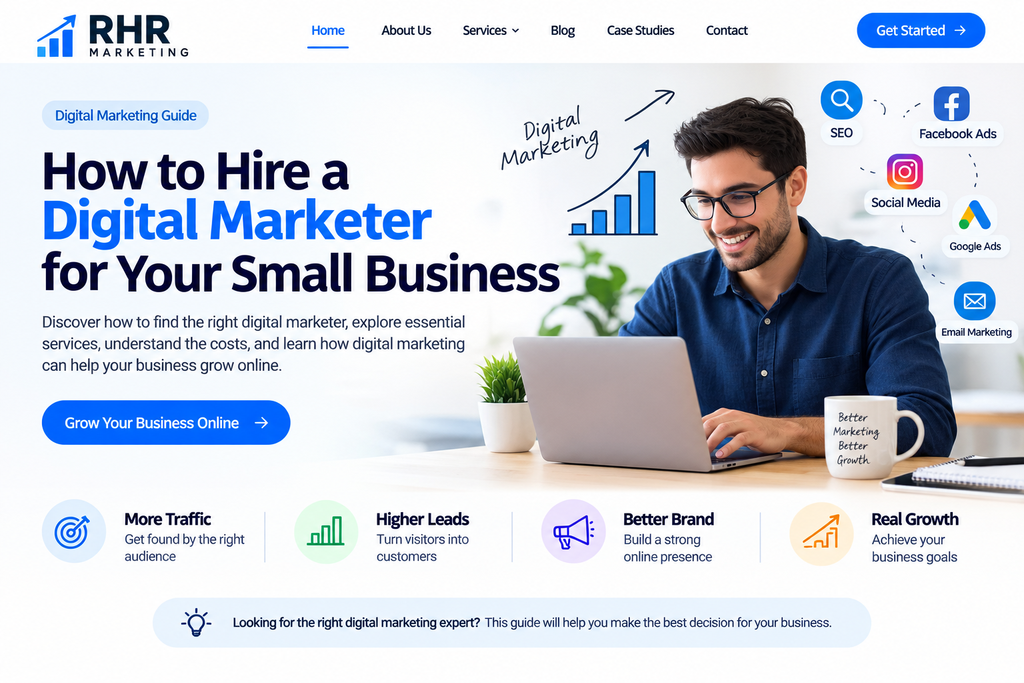
Are you struggling to attract new customers, increase website traffic, or generate consistent sales online? If so, it may be time to hire a digital marketer who understands your business goals and can help you build a stronger online presence.
Today, customers use Google, social media platforms, and websites to discover products and services before making purchasing decisions. Without an effective digital marketing strategy, even a great business can struggle to reach its target audience.
The good news is that digital marketing can help businesses connect with potential customers, improve brand awareness, and generate qualified leads. However, choosing the right marketing professional requires careful planning.
In this guide, you will learn what a digital marketer does, which services your business may need, how to choose the right expert, and what to consider before investing in digital marketing services.
What Is a Digital Marketer?
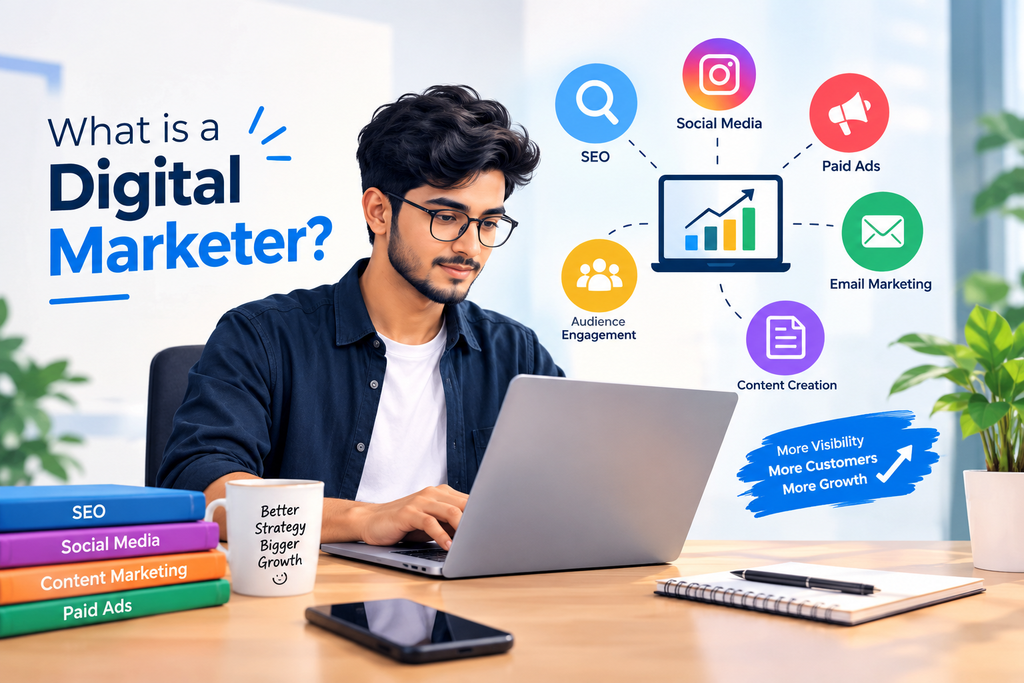
A digital marketer is a professional who helps businesses promote their products or services through online channels. These channels may include search engines, social media, websites, email marketing, and paid advertising platforms.
The main objective is to connect a business with the right audience and encourage meaningful actions, such as making a purchase, booking an appointment, submitting an inquiry, or contacting the company.
Depending on your business needs, a digital marketer may specialize in one service or manage several marketing activities.
For example, an online store may need Facebook and Instagram advertising to generate sales, while a local service business may benefit more from search engine optimization and Google Ads.
A successful marketing strategy begins with understanding your audience, identifying your business goals, and selecting the right channels to reach potential customers.
Why Should You Hire a Digital Marketer for Your Small Business?
Small businesses often have limited budgets, time, and resources. Digital marketing helps them focus their efforts on reaching relevant audiences instead of relying entirely on traditional promotional methods.
Here are some important benefits.
1. Reach Your Target Audience
Not every person is a potential customer for your business. Effective digital marketing helps you identify and reach people based on factors such as location, interests, search behavior, and relevant demographics.
For example, a local dental clinic may focus on people searching for dental services in its area. An e-commerce business may target customers interested in its particular products.
Reaching a relevant audience can help you use your marketing budget more effectively.
2. Increase Website Traffic
Your website can serve as an important destination for potential customers. However, simply creating a website does not guarantee that people will find it.
A digital marketer can improve your online visibility through search engine optimization (SEO), content marketing, social media promotion, and paid search campaigns.
These activities can help more relevant visitors discover your website and learn about your products or services.
3. Generate More Qualified Leads
Website traffic is valuable, but visitors do not automatically become customers.
Lead generation focuses on encouraging interested people to take the next step, such as completing a contact form, requesting a quotation, booking a consultation, or sending a message.
A digital marketer can help improve landing pages, advertising messages, calls to action, and conversion tracking to support this process.
4. Measure Marketing Performance
Digital marketing platforms provide data that businesses can use to evaluate their campaigns.
Depending on the platform and tracking setup, you can monitor metrics such as website visits, advertising clicks, cost per lead, conversion rate, and sales.
These insights help you understand which activities are contributing to your business objectives and where improvements may be needed.
5. Build Long-Term Brand Visibility
Consistent, useful content can help people become familiar with your business. SEO articles, social media posts, helpful videos, and informative website pages can all contribute to a stronger online presence.
While results take time and vary by industry, a well-planned marketing strategy can support long-term business growth.
What Digital Marketing Services Does Your Business Need?
Before you hire a digital marketer, identify the biggest challenge your business needs to solve. Different services serve different purposes.
Search Engine Optimization (SEO)
SEO helps improve a website’s visibility in organic search results.
An SEO professional may work on keyword research, website content, page titles, internal links, technical issues, and website usability.
For example, a company offering accounting services may create useful pages targeting relevant searches such as accounting services for small businesses.
SEO is particularly useful for businesses that want to attract people actively searching for relevant information, products, or services.
However, organic rankings take time, and no professional can guarantee a particular Google position.
Facebook and Instagram Ads
Paid social media advertising allows businesses to promote offers, products, and services to selected audiences.
A Meta Ads specialist can help with campaign planning, audience selection, ad creative, budget allocation, conversion tracking, and performance analysis.
These campaigns may be useful for e-commerce stores, education providers, local businesses, and companies seeking qualified leads.
Success depends on factors such as the offer, audience, creative quality, website experience, competition, and campaign optimization.
Google Ads
Google Ads can help businesses appear in sponsored search results when users search for relevant products or services.
For example, a business selling professional website design services might advertise for relevant searches from people looking for website designers.
A Google Ads specialist can help select keywords, organize campaigns, write advertisements, manage bids, and monitor conversions.
Businesses should track meaningful results rather than judging a campaign only by impressions or clicks.
Social Media Marketing
Social media marketing involves planning and publishing content, engaging with audiences, maintaining brand consistency, and measuring performance across relevant platforms.
A social media marketer may create a content calendar, develop post ideas, review engagement data, and help direct interested users to a website or inquiry form.
This service can be valuable for businesses that want to build trust and maintain a consistent relationship with their audience.
Website and Conversion Optimization
Your website should make it easy for visitors to understand your offer and take action.
Conversion optimization may involve improving page speed, mobile usability, headlines, contact forms, service descriptions, and calls to action.
For example, a clear contact button and a straightforward inquiry form can make it easier for potential clients to contact your business.
How to Choose the Right Digital Marketing Expert
Finding a suitable digital marketing professional is about more than choosing the lowest price. You need someone whose skills, communication, and approach match your business requirements.
1. Define Your Business Goals
Start by identifying what you want to achieve.
Do you want more website visitors, qualified leads, online sales, local customers, or greater brand awareness?
Clear objectives help you choose the right service and evaluate whether your marketing investment is producing useful results.
2. Review Relevant Experience
Ask potential marketers about projects related to your industry or business objectives.
Review their portfolio, sample work, campaign reports, or case studies when available. Look for evidence of their contribution and the results achieved.
Be cautious of unsupported claims or promises of guaranteed rankings and sales.
3. Understand Their Marketing Strategy
A professional should be able to explain what they plan to do, why it matters, and how progress will be measured.
For example, an SEO strategy may include keyword research, content improvements, technical checks, and performance monitoring.
A paid advertising strategy may include audience research, campaign setup, conversion tracking, and ongoing optimization.
4. Ask About Reporting and Communication
Regular communication helps you understand what is happening with your marketing investment.
Before starting, agree on reporting frequency, performance metrics, deliverables, and responsibilities.
A useful report should explain the work completed, the results observed, the challenges encountered, and the next steps.
5. Compare Pricing and Scope
Digital marketing costs vary according to the service, project complexity, competition, experience, and amount of work involved.
Some professionals charge hourly rates, while others offer fixed-price projects or monthly retainers.
Compare what each proposal includes. A low price may not cover the tracking, reporting, creative work, or ongoing management your business requires.
Choose an arrangement that fits your budget and business objectives.
How Much Does It Cost to Hire a Digital Marketer?
There is no single price for hiring a digital marketer. Costs depend on the services you need, the professional’s experience, your target market, and the scope of the project.
Common pricing arrangements include:
- Hourly services: Suitable for consultations, audits, and specific tasks.
- Project-based services: Useful for website SEO audits, campaign setup, or defined marketing projects.
- Monthly retainers: Appropriate for ongoing SEO, social media management, and advertising optimization.
- In-house employment: An option for businesses that require dedicated, full-time marketing support.
Remember that management fees and advertising spend are often separate expenses. Ask for a clear breakdown before committing to a service.
Instead of selecting a marketer based on price alone, consider the quality of the strategy, communication, reporting, and potential value to your business.
How to Measure Digital Marketing Success
After hiring a digital marketer, establish measurable performance indicators that align with your goals.
For SEO, you might monitor organic traffic, relevant keyword visibility, qualified inquiries, and organic conversions.
For paid advertising, useful metrics may include cost per lead, conversion rate, customer acquisition cost, and return on advertising spend when revenue tracking is reliable.
For social media marketing, you may evaluate meaningful engagement, website visits, leads, and sales rather than follower counts alone.
It is also important to use suitable analytics and conversion tracking. Without reliable measurement, it can be difficult to determine which marketing activities are generating business value.
Review results regularly and use the findings to improve your strategy.
Common Digital Marketing Mistakes to Avoid
Businesses can waste time and money when they approach digital marketing without a clear plan.
Avoid these common mistakes:
- Targeting an audience that is too broad or poorly defined.
- Running advertisements without appropriate conversion tracking.
- Expecting immediate SEO results.
- Publishing content without understanding customer needs.
- Choosing a marketing professional based only on price.
- Ignoring mobile website performance and user experience.
- Measuring success through likes and clicks without considering leads or sales.
- Expecting guaranteed rankings or a fixed number of customers.
A better approach is to set realistic goals, test your strategy, review performance data, and improve your marketing activities over time.
Why Choose RHR Marketing for Digital Marketing Support?
If you are looking for ways to strengthen your online presence, RHR Marketing can be a starting point for exploring digital marketing solutions suited to your business goals.
The right marketing approach should begin with understanding your audience, evaluating your current online presence, and identifying opportunities for improvement.
Depending on the services available, your business may benefit from SEO, paid advertising, social media marketing, content planning, or website optimization.
Before starting a project, discuss your objectives, target audience, budget, expected deliverables, and measurement plan.
The aim should be to develop a practical strategy that supports your business rather than investing in marketing activities without a clear purpose.
Ready to improve your digital marketing strategy?
Visit RHR Marketing to explore the available services and discuss your business requirements.
Whether your priority is improving website visibility, generating qualified leads, or reaching more potential customers, the first step is identifying the right strategy for your business.
Frequently Asked Questions
1. Why should I hire a digital marketer?
Hiring a digital marketer can help you plan and manage online marketing activities, reach relevant audiences, improve website visibility, and measure campaign performance. The right professional depends on your goals and budget.
2. How do I find a digital marketer for my small business?
Start by identifying your marketing goals and required services. Search online, review portfolios, compare proposals, check relevant experience, and ask how the professional measures results.
3. Which digital marketing service is best for a small business?
The best service depends on your objectives. SEO can support organic search visibility, paid advertising can help reach potential customers, and social media marketing can support brand awareness and audience engagement.
4. How long does digital marketing take to produce results?
The timeline varies by channel, industry, competition, budget, and execution. Paid campaigns can generate traffic soon after launch, but profitable and consistent results are not guaranteed. SEO often requires sustained work over a longer period.
5. Can digital marketing help me get more customers?
Yes, digital marketing can help businesses reach relevant audiences and generate leads. Actual results depend on the offer, audience, competition, website experience, sales process, and marketing execution.
6. What should I ask before hiring a digital marketer?
Ask about relevant experience, proposed strategy, deliverables, pricing, reporting, communication, tracking, and how success will be measured. Avoid relying on guarantees without credible evidence.
Conclusion
Hiring a digital marketer can help your small business approach online growth with a clearer strategy. From SEO and Google Ads to social media marketing and conversion optimization, each service can contribute to a different part of the customer journey.
The key is to understand your business goals, select the right services, measure meaningful results, and work with a professional who communicates clearly and uses evidence to guide decisions.
If you are ready to improve your online marketing, explore RHR Marketing and identify the next steps that make sense for your business.
Take the first step today: review your marketing needs, define your goals, and contact RHR Marketing to discuss your requirements.